Trusted Detroit Tree Removal
Choose Big Dave's Tree for dependable, standards‑compliant land clearing in Detroit. You'll receive ISA‑certified crews who manage permits, 811 utility locates, MIOSHA/OSHA safety, and EGLE erosion controls. We conduct pre-work assessments, utility mapping, GPR/potholing, and set exclusion zones. Our Tier 4 equipment, remote mulchers, and spotter protocols mitigate risk and site impact. We sort debris, use licensed haulers, and deliver manifests and scale tickets. Count on itemized pricing, milestone-based schedules, and documented compliance throughout-there's more that can help you plan confidently.
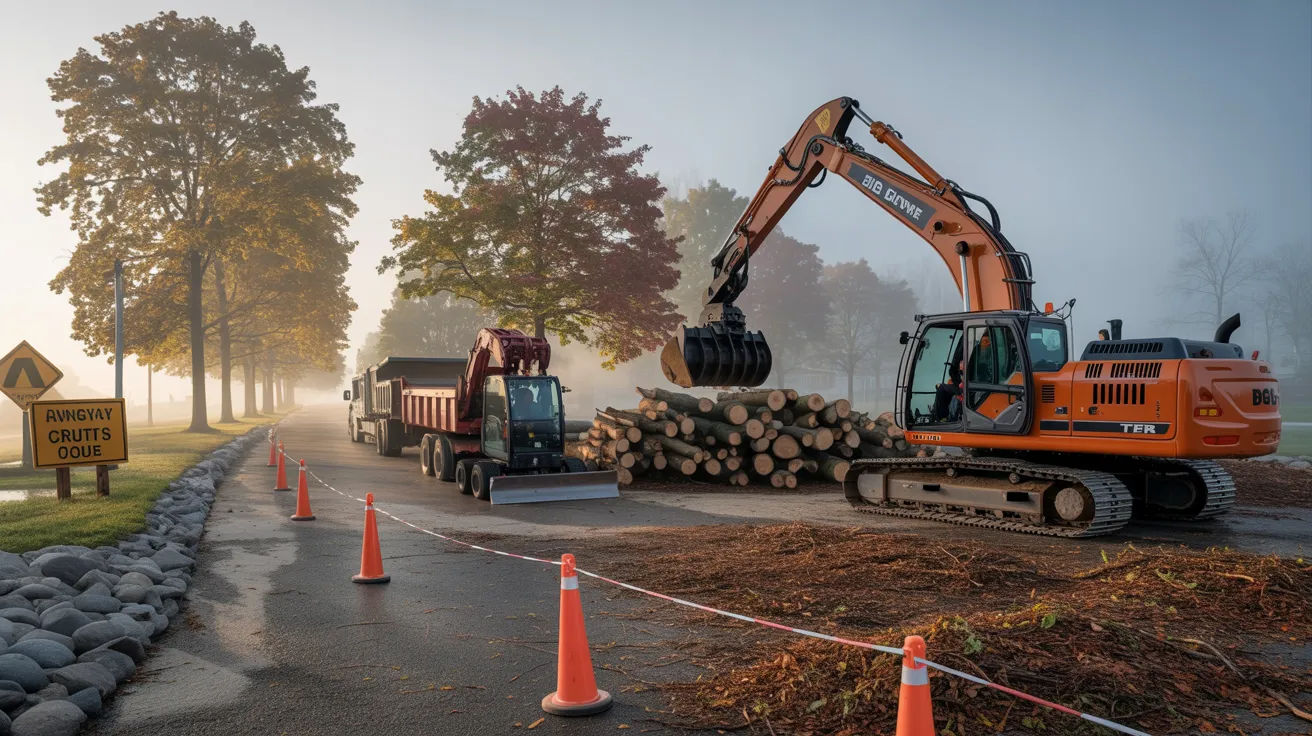
Essential Insights
- City of Detroit compliant land clearing with permits, right-of-way coordination, utility locates, and OSHA/MIOSHA safety plans coordinated by Big Dave's Tree.
- Project-specific erosion control: EGLE-aligned SWPPP, silt barriers, stabilized entry points, dust control, and documented inspections.
- Protected operations with Tier 4 equipment, remote mulchers, exclusion zones, certified operators, and radio-backed spotters.
- Utility location and validation: 811 call center coordination, ground penetrating radar and electromagnetic locating, vacuum excavation potholing, APWA compliant markings, and non-excavation offsets.
- Clear pricing and documentation: itemized scope, daily logs, before/after surveys, recycling-focused debris handling, and licensed hauling with manifests.
Exactly Why Detroit Real Estate Should Have Professional Land Clearing
While it might appear to be simple brush removal, professional land clearing in Detroit protects your site, structures, and utilities by following codes and proven procedures. You face legacy infrastructure, variable soils, and strict city specifications impacted by urban rezoning. A certified crew checks utility locates, secures exclusion zones, and controls equipment access to prevent line strikes and structural undermining. They assess load-bearing capacity, drainage patterns, and vegetation root matrices to minimize erosion and heave.
You'll also need due diligence on soil contamination. Experts sample suspect hotspots, oversee Phase I/II assessments, and partition regulated materials to eliminate cross-contamination and fines. They implement BMPs-silt fencing, stabilized construction entrances, and dust suppression-to comply with state and local requirements. Finally, compliant clearing lowers permit risk, stabilizes your schedule, and safeguards long-term site performance.
Our Complete Land Clearing Services
Trust a certified, city-compliant crew to clean your Detroit site to specification and safely. We deliver a comprehensive scope: selective tree and brush removal, stump grinding, root grubbing, and debris hauling with verified waste-stream separation. We deploy low ground pressure equipment, GPS-guided cuts, and erosion controls to maintain soils and adjacent properties.
We map boundaries, mark protected trees, and mitigate invasive species using approved mechanical methods and targeted treatments. During urban redevelopment projects, we perform rough-grading according to specifications, implement temporary stabilization measures, and prepare subgrades for utility installation and paving. Our team handles permit coordination, ordinance compliance, and traffic-safe access plans. You'll receive before/after surveys, daily logs, and restoration plans that meet Detroit codes and industry standards, so your site is cleared cleanly, compliant, and ready for construction.
Safety-Priority Practices and Awareness of Utility Lines
You initiate a pre-work site assessment to detect hazards, verify access, and designate exclusion zones per OSHA and MIOSHA requirements. You obtain utility locates, analyze records, and use utility mapping to confirm underground and overhead lines, then mark them to 811 and ASCE 38 standards. You apply stand-off distances, equipment limits, and lockout-notification protocols prior to any grubbing, grading, or cutting commences.
Pre-Job Worksite Evaluations
Before any machine starts or a tree comes down, complete a formal pre-work site assessment to identify hazards and validate compliance with Detroit ordinances and OSHA 29 CFR 1910/1926. Establish a site-specific safety plan, establish control zones, and inform your crew on responsibilities, lockout/tagout, and emergency egress. Confirm access routes, slope stability, and equipment load ratings.
Document soil testing to gauge bearing capacity and rutting risk; adapt matting or low-ground-pressure equipment accordingly. Perform wildlife surveys to discover protected species and nesting periods; implement buffers and timing restrictions. Inspect tree structure for defects, lean, and tension/compression wood to define felling or dismantling methods. Confirm weather, visibility, and noise limits. Identify overhead and underground utility exposure potential and establish minimum approach distances. Log findings and approvals before deployment.
Utility Detection and Marking
After completing the site assessment, identify and mark all utilities to prevent struck-by, arc-flash, and release hazards. Call 811 and coordinate with Detroit utilities for site verification and records. Apply subsurface detection methods-electromagnetic (EM) locators, ground-penetrating radar (GPR), and acoustic confirmation-to detect energized lines, gas, communications, water, and sewer laterals. Sweep and trace in perpendicular passes, then test pit with vacuum excavation to verify depth and alignment before mechanical clearing.
Use color-coded flagging procedures per APWA: red (electric), yellow (gas), orange (communications), blue (water), green (sewer). Tag direction of run, depth, and date. Establish no-dig offsets, boom-height limits, and equipment exclusion zones. Inform your crew on line locations and emergency shutdown procedures. Confirm again after rainfall, grading shifts, or plan changes to maintain control.
Minimizing Construction Site Disturbance and Erosion Prevention
Although every land-clearing initiative is unique, minimizing site impact in Detroit commences with a stamped erosion and sediment control plan that meets Michigan EGLE and City of Detroit regulations. You confirm drainage patterns, calculate disturbed zones, and define stabilization deadlines. Keep vegetation buffers along waterways and property lines to decrease runoff velocity and protect habitat. Install silt fencing on contour, keyed-in and toed-in, with appropriate posts and overlaps; inspect after rain and repair immediately. Sequence clearing to limit exposed soil, stabilize slopes within prescribed timelines, and keep perimeter controls intact until permanent cover is established. Use construction entrances to eliminate track-out, sweep paved surfaces daily, and oversee dewatering with sediment filtration. Document inspections, rainfall events, and corrective actions to establish compliance.
Tools and Methods for Effective Results
You begin with a site assessment that documents utilities, soil bearing, tree species, and access in line with local codes and OSHA guidance. You then match modern clearing machinery-mulchers, forestry cutters, excavators with grapples, and low-ground-pressure carriers-to terrain and production targets. You implement safe debris handling by dividing materials, controlling dust, using certified rigging, and routing loads to approved disposal or recycling centers.
Site Assessment Essentials
Before taking down a single tree or slab, commence with a structured site assessment that conforms to Detroit building codes, Michigan EGLE regulations, and OSHA 1910/1926. Validate parcel boundaries, utility locates (MISS DIG 811), access routes, and protected features. Catalog slopes, drainage paths, and carry out wetland delineation to avoid regulated impacts and costly delays.
Run geotechnical checks to predict soil compaction behavior, bearing capacity, and erosion risk. Flag hazard trees, overhead lines, and confined spaces; set up exclusion zones and a traffic control plan. Analyze soils for contaminants according to Part 201 due care, and develop runoff controls to keep sediments onsite. Outline staging, debris stacking, and haul paths to minimize surface disturbance. Log findings in a job hazard analysis and site-specific safety plan for crew briefing and compliance.
Contemporary Ground Clearing Machines
After completing site assessment and defining controls, identify machinery that fits Detroit's lot sizes, access constraints, and regulatory limitations. You'll focus on low-ground-pressure compact loaders for cramped urban parcels, pairing them with forestry heads sized to canopy density. Designate Tier 4 Final engines to comply with emissions rules and reduce neighborhood impact. For steep grades, soft soils, or snag-prone understory, employ remote-operated mulchers to preserve operator standoff distance and line-of-sight safety.
Match tool to task: cutting tools for undergrowth and seedlings; high-capacity drum units for heavy scrub; controlled-direction saws for specific tree takedown. Check safety guards, spark suppression devices, and hydraulic line safeguards. Use safety observers, rear alert devices, and clearly defined safety perimeters. Implement uniform pre-use inspections, energy isolation procedures during service, and wireless coordination systems to coordinate movement and prevent conflicts.
Protected Debris Processing
Generally, safe debris management in Detroit relies on structured sequencing, right-sized attachments, and controlled movement paths to reduce exposure and nuisance. You organize brush, logs, and soil separately, then load with shielded grapples and low-leak hydraulics to decrease pinch and spill risks. Keep exclusion zones marked; only trained handlers enter active zones. Keep three points of contact, spotters with radios, and backup alarms per MIOSHA requirements. You'll tarp loads, meet axle-weight limits, and anchor with rated tie-downs. Chip clean material; segregate contaminated debris for licensed disposal. Schedule hauling to avoid peak traffic and wind events. Use mulchers to decrease volume; reserve controlled burns for permitted rural sites, with firebreaks, water on hand, and air-quality compliance. Document loads, manifests, and incident-free closeout.
Permits, Adherence to Regulations, and Responsible Debris Disposal
Even when your project seems straightforward, land clearing in Detroit demands strict adherence to permits, codes, and disposal regulations to avoid stop-work orders and fines. You must verify zoning, tree protection ordinances, soil erosion controls, and utility locates before any equipment mobilizes. Match your plan with local government requirements, including right-of-way restrictions and haul routes.
Synchronize permit timelines with project scope, ensuring notices, site signage, and documented inspections are in place. Maintain erosion and sediment controls, noise limits, and dust suppression according to ordinance. Sort wood, soil, and inert materials at the source for compliant disposal or recycling. Employ licensed haulers, manifests, and scale tickets for accountability. Establish disposal partnerships with approved transfer stations, composting centers, and mills to enhance recovery and reduce landfill use.
Transparent Costs and Project Schedules
Prior to signing any contract, insist on an itemized scope, unit rates, and a milestone schedule that links costs to measurable deliverables. You should see quantities for tree felling, stump grinding, hauling, erosion controls, and restoration, each with unit pricing. Demand clear estimates that match drawings, utility mark-outs, and survey data to avoid change orders.
Detail commencement/completion dates, interim milestones, and float. Demand timeline guarantees with penalties for delays not stemming by weather, force majeure, or client-directed changes. Link payments to verified milestones, not time-and-materials alone. Include requirements for traffic control, OSHA-compliant work windows, and environmental restrictions to minimize slippage.
Require daily logs, progress photos, and as-built updates. Verify equipment availability, crew sizing, and contingency plans to sustain productivity safely.
Why Go With Big Dave's Tree for Your Detroit Project
You have set clear expectations for budgets and timeframes; now select a contractor that can meet them without compromise. With Big Dave's Tree, you get arborists certified by ISA, OSHA-compliant crews, and calibrated equipment sized to your site. We acquire permits, coordinate utility locates, and implement location-specific SWPPP and BMPs to control erosion, sediment, and debris migration.
We schedule around Detroit constraints with seasonal scheduling that reduces soil disturbance and maintains habitat windows. Our traffic control, flagging, and exclusion zones lower risk to employees and residents. You'll observe documented pre-job hazard assessments, daily JHAs, and post-clearance verification.
Our priority is community engagement, informing stakeholders, adhering to local ordinances, and upholding clean haul routes. Expect clear reporting, confirmed insurance, and a zero-tolerance approach to shortcuts.
Frequently Asked Questions
Are You Offering Land Clearing Over Winter or After Heavy Snowfall?
Yes, we perform land clearing during winter and after heavy snowfall. You receive a site-specific plan that prioritizes winter access, ground load-bearing conditions, and equipment constraints. We commence with snow removal to identify utilities, confirm boundaries, and reduce ice hazards. You can expect erosion controls, low-ground-pressure machinery, and adherence to local and OSHA standards. We'll schedule around freeze-thaw cycles, document soil disturbance, and maintain safe entry and exit for crews and emergency access.
Can You Coordinate With Builders or Surveyors for Staking and Layout?
Yes-you can trust in accurate builder coordination and stake layout. Visualize crisp flags marking a clean corridor through brush, every marker tied to survey control. You'll have coordination with surveyors for staking, offsets, and benchmarks, plus utility locates, tolerance checks, and as-built verification. We maintain compliance with OSHA, ANSI, and local right-of-way standards, copyright traffic and exclusion zones, and document everything. You review and approve layouts before work proceeds, delivering safe, standards-compliant execution from ground prep to final grade.
Are You Providing Tree Protection or Transplanting During Clearing?
Yes-clients can request tree preservation and tree transplanting during clearing. You receive ISA‑guided assessments, species suitability evaluations, and root preservation plans. We establish tree protection fencing, define TPAs, and use low-impact equipment. For transplanting, you receive proper root-ball sizing, anti-transplant-shock protocols, timed digging, and moisture management. We coordinate utility locates, soil amendments, and post-move monitoring. All work meets ANSI A300, Z133, and local ordinances to protect canopy, roots, and site safety.
What Insurance Coverage Do You Hold for Adjacent Property Damage?
We hold general liability and contractor's pollution liability, with certificate limits provided before mobilization. You will be furnished with additional insured endorsements and primary/non-contributory wording. We maintain workers' compensation and auto liability for on-road equipment. We don't depend on liability waivers alone; we conduct pre-condition surveys, vibration monitoring, and utility locates to mitigate risk. Our incident response plan, claims reporting protocols, and documented safety procedures align with ANSI A300, OSHA, and state regulatory requirements.
Can You Assist With Post-Clear Seeding or Native Habitat Restoration?
Absolutely. You obtain turnkey post-clear seeding and native habitat restoration. We create soil conditioning plans, specify regionally-appropriate native plantings, and calibrate seed rates to NRCS and ASTM standards. We install erosion controls, decompact soils, and apply certified native seed mixes. We schedule blooms to support seasonal pollinators, monitor germination, and adjust irrigation. We offer invasive-species suppression, mulch stabilization, and documentation, maintaining crew safety, wildlife protection, and compliance with local permitting and best management practices.
Summary
You need land cleared like a clean surgical cut-precise, secure, and standards-compliant. With Big Dave's Tree, you receive engineered efficiency: utility locates validated, erosion controls installed, and debris check here handled per ordinance. We mobilize calibrated equipment, comply with ANSI and OSHA protocols, and safeguard soil structure like a scaffold beneath your build. From transparent pricing to documented permits and timelines, your site transforms from overgrowth to ready-grade-smooth as a laser level-so your project begins on firm, code-compliant ground.